By the design team at The Display Boxes ·

What is the basic difference?
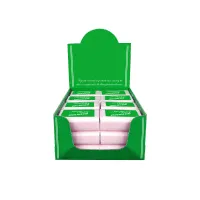
A counter display lives beside the till. It holds a small number of an impulse product and asks for a decision in the few seconds while someone waits to pay. Shelf ready packaging lives on the shelf. It is a shipping case that turns into a tray, and its job is to make shelf filling quick for staff and your product easy to find for shoppers.
One format is about attention; the other is about efficiency. Most of the decisions below follow from that.
It helps to think about who the display is really for. A counter display is aimed at the shopper in the queue and at the shop owner deciding whether to keep it. Shelf ready packaging is aimed first at the store staff who fill shelves and the buyer who sets the rules, and only then at the shopper.
Where does each format sit in a shop?
Counter displays sit on the counter itself, usually within arm's reach of the queue. Space there is tiny and fought over, so the display has to be compact and look after itself. Shelf ready trays sit in the space a retailer has planned for your product on a shelf, often between other brands, with a shelf above limiting the height.
This placement difference changes everything about the design: the footprint, the height, where the print goes and how the shopper sees it.
| Counter display | Shelf ready packaging | |
|---|---|---|
| Location | On the counter by the till | On a shelf in the aisle |
| Seen from | Above and in front, at arm's length | In front, often at an angle |
| Height limit | Space under any shelf or gantry | The shelf above |
| Main print area | Header card and front lip | Front panel and sides of the tray |
| Who decides | The shop owner or manager | The retailer's buyer or ranging team |
How does each arrive at the shop?
A counter display arrives in one of two ways. It may come flat for the shop, the rep or your team to fill, or it may arrive full and closed, with a lid that folds back into the header. Either way, it is built once and then refilled from stock.
Shelf ready packaging always arrives full. It is the case your product ships in. At the shop, a member of staff tears off the perforated front or lifts a hood, puts the tray on the shelf, and throws the empty tray away when the next case goes up. Nothing is refilled; trays are replaced.
That has a practical consequence for you. A counter display can be heavier, stronger and more decorative because it is used for weeks. A shelf ready tray needs to be strong enough for the journey and easy to open, and no more, because it is discarded with the next delivery.
Which suits my product?
Ask three questions. Is it an impulse buy? Does it sell in a store that fills shelves by the case? How much space will the shop give you? The answers usually point clearly one way.
- Small impulse items, sold in independent shops, cafés and pharmacies: counter display.
- Everyday items sold in supermarkets and convenience chains: shelf ready packaging.
- Launches and limited editions in small shops: counter display with a fold back lid.
- Products listed by a chain that has asked for SRP: shelf ready packaging, built to their guide.
Some products fit both. A chocolate bar might sit in shelf ready trays in a supermarket and in a counter display in a farm shop. In that case, design the packs once and treat the two displays as separate projects with shared artwork.
What does each cost?
Both start from £0.25 a box with us, and both are priced by size, board, print and quantity. The real difference is in how many you need. A counter display is used again and again, so a shop needs one or two. Shelf ready packaging is consumed with the stock: every case you ship is a tray, so you need as many as you ship cases.
That makes shelf ready packaging part of your packaging cost per unit, while a counter display is more like a piece of shop equipment you supply once.
When you compare quotes, compare the cost per unit sold, not per display. A counter display that sells hundreds of packs over its life costs very little per sale; a shelf ready tray costs the same on every case.
What does each format ask of the artwork?
Counter display artwork is a small poster. The header carries the brand and one message large enough to read from the queue, and the front lip carries the product name. Inside print helps because shoppers look down into an open display.
Shelf ready artwork has to work in a block. When several trays sit side by side, the fronts line up into one band of colour. Simple, bold branding repeated across the front and sides works best, and the tear away part can carry warehouse information instead of sales messages. Read our header card design tips for the counter side.
Be careful with fine detail on both. Counter displays are seen from a metre or two away, shelf trays from across an aisle, and neither gives the shopper time to read small print.
Can one design do both jobs?
Sometimes. A display box with a fold back lid can ship full like a case and then become a counter display, which suits brands selling the same product to a few chains and many independents. It is not true shelf ready packaging, because the tray stays rather than being replaced, but it covers both kinds of shop with one pack.
The other route is two packs from one artwork family: shelf ready cases for the chain and a counter display for independents. Keeping the same colours and logo makes your brand recognisable in both.
Ask your buyer before relying on this. Some chains accept a lidded display as shelf ready packaging; others insist on a tray that is thrown away.
How do I decide in practice?
With those answers in hand, the choice usually makes itself.
- List where your product sells now and where you want it to sell.
- Ask any chain buyer whether they require shelf ready packaging and for their guide.
- Ask two or three independent shops how much counter space they could give.
- Choose the format that fits most of your sales, and a second only if you need it.
- Send us the product size and count and ask for a price on both if you are unsure.
Do not be afraid to ask shops directly. Most owners are happy to say what works on their counter, and their answers are worth more than any rule of thumb.
What mistakes should I avoid?
The common ones are a counter display that is too big for real counters, a shelf ready case that will not tear cleanly, and artwork that is too detailed to read at a distance. Each one costs you goodwill with the people who decide whether your product stays. Measure the space, test the opening and keep the message short.
If in doubt, order a small first run, place it in a handful of shops and watch how staff and shoppers use it before ordering more.